

Paid ads can be a fast and powerful way to grow your gym—if you know how to use them. They help you reach the right people, drive traffic to your site, and fill your lead pipeline. But they also come with risks: high competition, rising costs, and no guaranteed ROI.
So how do you know if they’re worth it?
In this guide, we’ll break it all down so you can make a smart decision for your business without wasting money or time. You’ll learn:
- What paid ads are
- Why they’re effective
- Common pitfalls to watch out for
- How they stack up against organic marketing
- When paid ads are actually worth the investment
If you’ve avoided paid ads because they seem complicated or tough to manage with the systems you’re using, you’re not alone. But with clearer processes and better tools, running a campaign doesn’t have to feel so overwhelming.
What are Paid Ads?
Paid ads (also called pay-per-click or PPC ads) are a way for gyms to promote their services on platforms like Google, Facebook, Instagram, YouTube, and other websites. These ads show up where your audience is already scrolling, searching, or watching—making it easier to get in front of the right people at the right time.
Here are the most common types of paid ads you’ll see:
- Search ads (like Google Ads): Your ad appears at the top of search results when someone types in a relevant keyword—like “gyms near me” or “personal trainer.”
- Social media ads: Promote your gym directly in people’s feeds, stories, or reels on Facebook, Instagram, and other platforms.
- Video ads: Short, punchy video promotions that run on YouTube, TikTok, Facebook, or Instagram.
- Display ads: Banner-style ads that show up on websites your audience visits, using images or graphics.
- Retargeting ads: These re-engage people who’ve already visited your site but didn’t sign up—reminding them to come back and take action.
Why are Paid Ads Effective?
Paid ads only account for about 27% of website traffic, but when used well, they can be one of the most efficient ways to generate leads and grow your gym.

Here’s why they work:
More Targeted Reach
As a local gym owner, you don’t need to reach everyone—you just need to reach the right people nearby. Paid ad platforms like Google and Facebook give you powerful tools to target specific demographics (gender, age, income, family structure), locations, and behaviors.
And the good news? People actually want this. 4 out of 6 consumers prefer ads that are tailored to where they live.
Instant Visibility
Unlike organic content, which can take months to gain traction, paid ads work fast. They’re great when you’re running a time-sensitive offer or just want to generate interest quickly. In fact, studies show paid ads can boost brand awareness by 80%.
More Qualified Leads
Since you’re targeting the right people, the leads you get from paid ads are usually more serious—and more likely to sign up. One study showed that these leads can boost sales by up to 50% and cost 33% less than other sources. And because they’re more aligned with what you offer, they tend to stick around longer too.
Strong ROI (If You Have the Right Setup)
On average, paid ads return $2 for every $1 spent, which equals a 200% ROI. That’s assuming you’ve got a solid system for converting clicks into members.
- Better targeting = more conversions: Platforms like Facebook and Google let you focus on high-intent users who are ready to act.
- You can measure everything: Ad platforms give you dashboards to track clicks, bounce rates, conversions, and more—so you can test and improve your results.
If your current software makes it hard to track leads or follow up quickly, it can be tough to turn those clicks into actual members. This is often what holds gym owners back—not the ads themselves, but what happens after someone clicks.
Scalable and Predictable
One of the best parts about paid ads is that you control the budget. Want to spend $500 this month? Great—you’ll know exactly when you hit that limit, and roughly how many leads to expect in return.
But getting leads is only half the equation. Without the right systems to respond, nurture, and book them, a lot of potential can be lost. That’s why many gym owners pair their ad campaigns with marketing automation tools like Gym Lead Machine to follow up fast and stay organized.
What Are the Pitfalls of Paid Ads?
Paid ads can be a great way to grow your gym—but they’re not without challenges. Before you invest, it’s important to know what you’re getting into and where things can go wrong.
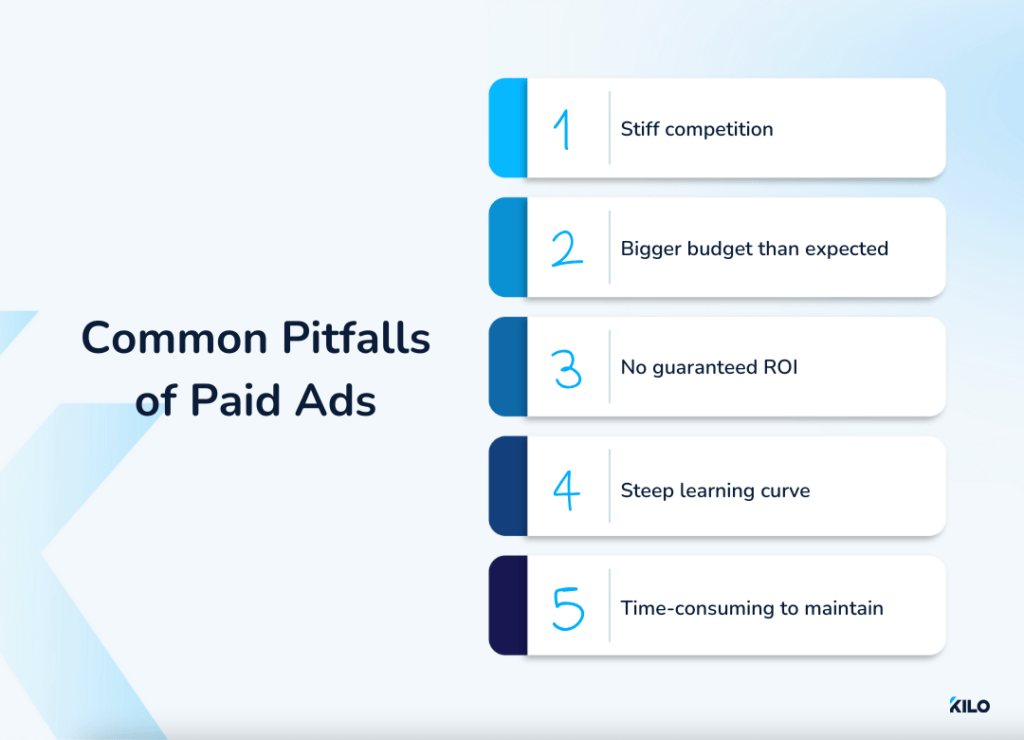
Here are some of the most common roadblocks gym owners face:
Stiff Competition
The fitness space is competitive, and that includes digital ads. Whether it’s “gyms near me,” “personal trainer,” or “fitness classes,” dozens of gyms may be bidding on the same high-intent keywords.
Why it’s tough:
- Limited ad space: Platforms like Google and Instagram only show a few ads at the top.
- High-demand keywords: The better the keyword, the more it costs—and fitness is a high-volume category.
- Auction-based pricing: You’re constantly competing in real-time for impressions and clicks.
- Ad fatigue is real: The more ads people see, the less they notice. That means you’ll need to regularly update your creatives to keep them fresh and effective.
Bigger Budget Than You Might Expect
A common mistake many gym owners make is underestimating what it takes to run a successful campaign. Here’s a snapshot:
- Average cost per lead (CPL) on Google Ads: $61.56 → 50 leads = ~$3,078
- Average CPL on Facebook Ads: $21.98 → 50 leads = ~$1,099
Smaller gyms tend to spend between 5–12% of their monthly revenue on ads. So if you’re generating $15,000/month in revenue, for example, expect to budget between $750–$1,800/month for paid advertising.
No Guaranteed ROI
Even with the right budget, there’s no promise your campaign will be profitable. You need strong creative, dialed-in targeting, a high-converting landing page, and an offer people actually want.
Again, many gym owners struggle here because their systems make it hard to convert leads once they come in.
Steep Learning Curve
Running a paid ad campaign means learning how to:
- Research keywords
- Write ad copy
- Build landing pages
- Set up tracking
- Optimize bids
It’s doable—but it takes time. And if your current tools don’t make it easy to manage campaigns or understand performance, it’s easy to feel stuck.
Time-Consuming to Maintain
Paid ads don’t run themselves. You’ll need to check in regularly to:
- Monitor performance
- Adjust creatives
- A/B test offers
- Refine targeting
- Track follow-up metrics
If you don’t have a clean system for lead follow-up—or if your current gym software makes it clunky to track conversions—it’s easy to let leads slip through the cracks. With a setup like Gym Lead Machine, these tasks are handled faster, so you can spend more time coaching.
Is Organic Website Marketing a Better Alternative to Paid Ads?
It’s true that 53% of all website traffic comes from organic search—and that first-page Google results capture over 70% of clicks. So on the surface, it might seem like focusing on organic marketing (like SEO, blog posts, and social content) is a better play than running paid ads.
But there’s more to it than just rankings.
Before you write off paid ads—or go all-in on organic traffic—it’s important to understand the trade-offs, timelines, and how each strategy fits into your overall marketing system.
What is Organic Search Advertising?
Organic search advertising refers to the unpaid methods of attracting people to your website—mainly by showing up in search results, social feeds, and inboxes through content that’s relevant and valuable.

Here are the most common organic strategies:
- Social media posts: Share images, videos, or updates on platforms like Instagram and Facebook to build awareness and drive traffic to your site.
- Search engine optimization (SEO): Improve your site’s visibility on Google through keyword research, high-quality content, backlinks, and a solid site structure.
- Email newsletters: Stay in touch with leads and members by delivering helpful content straight to their inbox—plus, you can use emails for follow-ups or re-engagement.
- Blog content: Publishing useful blog posts can improve your rankings, establish your authority, and keep your site active in search engines.
Search engines, social platforms, and forums rely on relevance to show results. That means your gym’s content will only surface organically if it matches what people are searching for—and if your site is structured correctly.
But here’s the catch: if your gym website is hard to update or not optimized for search, even your best content might not get seen. That’s why many gym owners switch to tools that make SEO and content updates easier to manage.
Why is Organic Search Effective?
When done right, organic marketing can be one of the most powerful ways to drive traffic, build trust, and grow your gym over time. Unlike paid ads, organic strategies rely on consistent content, community engagement, and search visibility—without the cost of clicks.
Here are a few key reasons gym owners lean on organic tactics:
- It’s free to implement. You don’t need to pay for clicks or impressions. You can list your website on Google, post on social media, publish blog content, and send email newsletters at little to no cost.
- It builds long-term trust and authority. When people consistently see valuable, relevant content from your gym, it positions you as an expert. Over time, this builds credibility, increases brand awareness, and makes your gym the go-to choice in your community.
- It encourages authentic engagement. Organic content opens up conversation. Potential members can comment, ask questions, or leave reviews—all of which can help create stronger relationships and a more engaged community.
Just keep in mind: to get real traction, your content has to be relevant, well-written, and easy to find. If updating your website or managing content feels clunky, that’s often a sign your current setup isn’t working for you.
Why Paid Advertising Might Be a Better Choice Than Organic Marketing
It’s true—organic search results often have a higher click-through rate (CTR), ranging from 15.7% to 28.5%, compared to about 2% for paid ads. But here’s the trade-off: organic strategies can take months to gain momentum, while paid ads deliver traffic almost instantly.
Organic marketing also lacks precision targeting. Your visibility depends heavily on picking the right keywords and staying in Google’s good graces. Paid ads, on the other hand, let you control exactly who sees your offer—based on location, behavior, demographics, and more.
And here’s a stat that surprises a lot of gym owners: 96.55% of content never gets any organic traffic from Google at all.
Unless your website is highly optimized—with strong SEO, great content, and solid backlinks—it’s tough to stand out organically. That’s why many gyms treat organic marketing as a support strategy, not the primary driver of growth.
Should You Choose Paid Ads Over Organic Search?
If you need leads quickly, paid ads should be the foundation of your gym’s marketing strategy. They’re fast, targeted, and scalable—perfect when you’re trying to grow on a timeline.
That said, organic marketing still plays an important role. It helps build long-term brand awareness, trust, and engagement—especially when paired with consistent content and a well-optimized website.
Ideally, the two should work together. Paid ads can deliver immediate results, while organic content builds momentum that lasts.
When Should You Invest in Paid Ads?
The best time to invest in paid ads is when you’re ready to grow—and need leads quickly. But before you start spending, it’s important to make sure your gym is set up for success.
Ask yourself these questions first:
Do you have a clear offer?
What will make someone click your ad? Think about what’s most compelling: a free trial, discounted membership, free personal training session, or something else that feels valuable and time-sensitive.
Is your sales funnel working smoothly?
Leads won’t turn into members on their own. You need a system to follow up fast and consistently. Your sales funnel should include:
- a strong ad
- a lead capture form
- quick and personalized follow-up (texts, calls, DMs)
- a clear closing process
If your current setup makes follow-up feel disorganized or slow, you may not get the full ROI from your ad spend.
Can your gym handle more members?
Do you have the space, staffing, and systems to support new members without hurting your service quality? If not, paid ads could actually hurt retention. Make sure your gym is ready to deliver a great experience at a higher volume.
Is it the right time of year?
Some seasons work better than others. Many gyms see success running paid ads in late winter or early spring, when New Year’s resolutions are still top of mind—or during seasonal slumps when leads need a boost.
Can you afford to test and optimize?
Paid ads don’t usually work perfectly on day one. You’ll need time and budget to test, tweak, and improve. Most small gyms invest 5% to 12% of monthly revenue in paid ads. So, for example, if you’re making $15,000 a month in revenue, expect to spend anywhere from $750 to $1,800.
Bottom Line
Paid ads can absolutely be worth the investment—when your systems are ready to support them. The strategy works best when you’re able to capture leads, follow up quickly, and convert traffic into paying members without letting anything slip through the cracks.
But for many gym owners, the real blocker isn’t the ads—it’s the software they’re using to manage it all.
This is the best website + CRM solution in the boutique/small gym world. It helps that the people who started this company are former gym owners who know exactly what we need (and also what we don’t). I can’t imagine having a better solution for funneling leads through the process to become members. In addition, the support team is incredibly fast and helpful when you need them.
— Chris, Gym Owner & Kilo Customer
If running paid ads has felt overwhelming in the past, or your current setup makes it harder than it needs to be, it might be time for a change.
Book a call today to see how Kilo can help you streamline your systems.


